How the calculation works
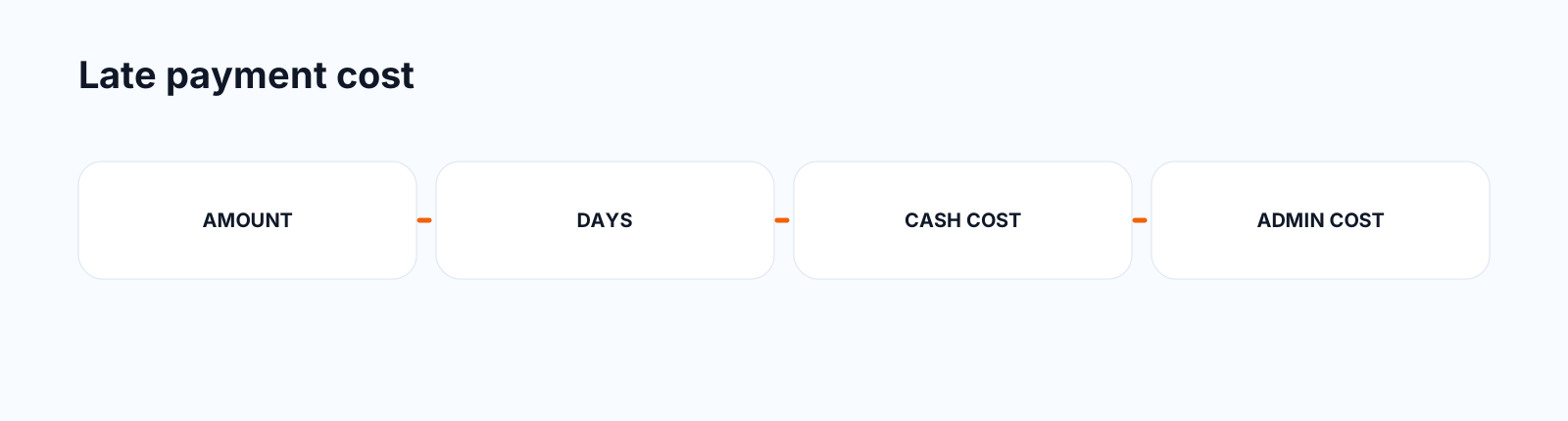
The direct cost has two parts, added together. Neither one is a guess.
Financing cost, what it costs you to be short that cash for as long as it is overdue:
financing cost = overdue amount × annual rate ÷ 100 × days late ÷ 365
Admin cost, what the time spent chasing it is worth:
admin cost = (admin minutes ÷ 60) × admin hourly value
Direct cost is simply the two added together: direct cost = financing cost + admin cost.
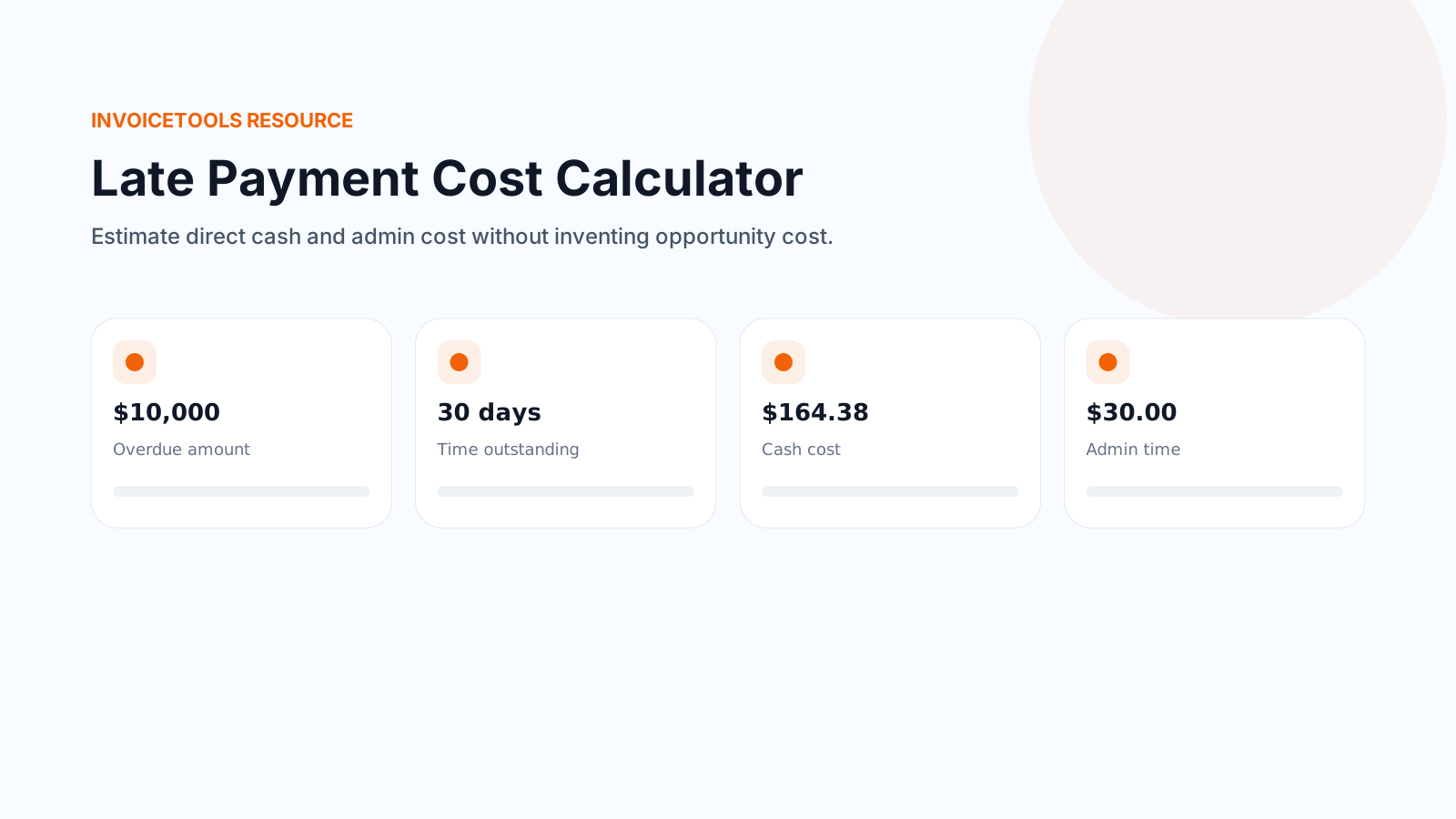
Worked example, the calculator's own defaults: a $10,000 invoice, 30 days late, at a 20% annual rate, with 45 minutes of admin time worth $40 an hour.
Financing cost: $10,000 × 20% × 30 ÷ 365 = $164.38
Admin cost: (45 ÷ 60) × $40 = $30.00
Direct cost: $164.38 + $30.00 = $194.38
Cash tied up in an overdue invoice is not available for anything else, whether that is stock, payroll or a line of credit you would rather not draw on. That is a real cost too, but it depends on what you would have done with the money, which nobody can know for certain, so no dollar figure for it is shown here. Guessing one would make the result look more precise than it actually is.
This is not a late fee
A late fee is a figure you charge a customer, usually set out in your payment terms or a state's own rules on what a contract can charge. This calculator does not produce that number. It estimates what the wait is costing your own business internally, which is a different question with a different answer.
If you need the figure to put on a document, or the letter that goes with it, the late fee generator is built for that. This page is for deciding how hard to chase a payment, not for billing anyone.
What to do with the number
A small direct cost on a short delay is not worth much action beyond a normal reminder. A direct cost that keeps climbing on a client who is consistently late is a sign to tighten payment terms, ask for a deposit up front on the next job, or stop extending terms to that client at all.
It is also a plain way to answer the question of whether chasing harder is worth the admin time it costs. If the admin cost is already most of the total, another phone call may not be the highest-value use of that time.
Related tools
- Late fee generatorThe fee, the letter and the clause, if you need to charge one
- Payment termsWhat net terms mean and how to set them
- DSO calculatorHow long it typically takes your business to get paid
- Days past due calculatorHow late a specific invoice is right now
Questions people ask
Is this the late fee I should charge my customer?
No. This is an internal estimate of what waiting on the money is costing your own business: the financing cost on the cash you have not received yet, plus the time your admin spends chasing it. A late fee you charge a customer is a separate, contract-based figure, and the late fee generator handles that calculation.
Where does the annual rate come from?
Use whatever it actually costs you to be short that cash: your business line of credit rate, a credit card rate if that is what covers the gap, or your own cost of capital. There is no single correct number, so the calculator lets you set it.
Why is there no opportunity cost dollar figure?
Because it cannot be measured honestly. What you would have done with the cash if it had arrived on time is a guess, and dressing a guess up as a number makes the whole result look more precise than it is. The financing cost and the admin cost are both figures this calculator can actually justify.
How is the admin cost worked out?
Minutes spent chasing the payment, converted to hours, multiplied by what your time (or whoever follows up) is worth per hour. It is a real cost even though no invoice ever gets sent for it.
What should I do with this number?
Use it to decide how hard to chase, whether to tighten payment terms, or whether a deposit on the next job is worth asking for. It is a decision input, not a number to put on a document.