The short version
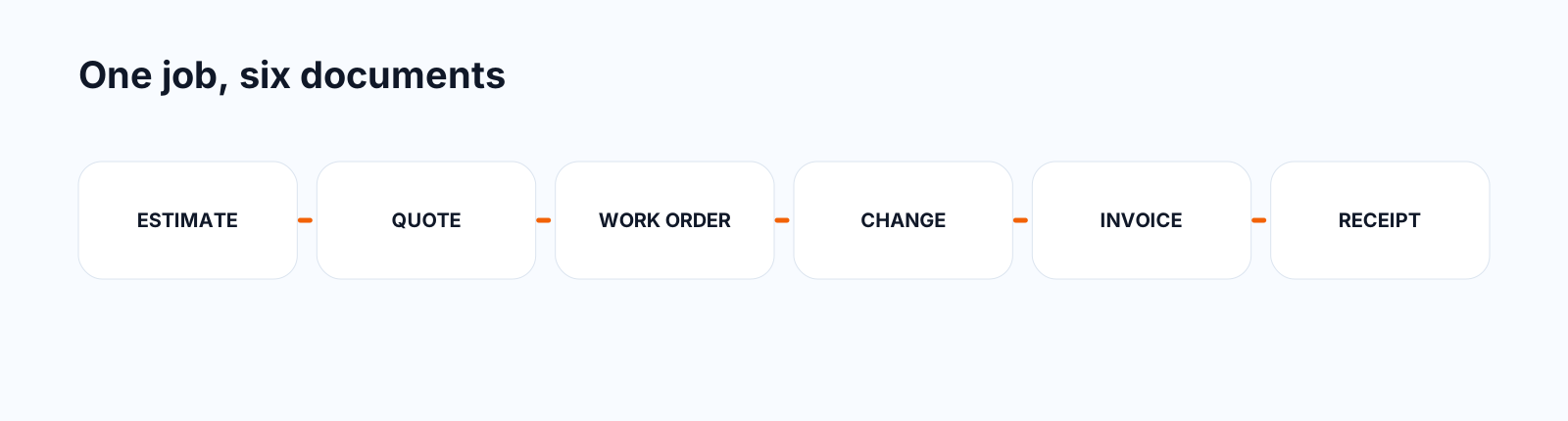
An estimate is a rough range given before you fully know the job. A quote is a defined offer the client can accept. A work order tells the crew what to do. A change order records a variation once work has started. An invoice asks for payment. A receipt confirms it arrived. Mixing these up, or skipping one without meaning to, is usually where a paperwork dispute starts.
None of this is about paperwork for its own sake. Each document exists because the question at that point in the job is different from the question before it, and reusing one document for two different questions is how details get lost: an estimate quietly treated as a fixed price, a verbal change nobody wrote down, a receipt that does not say which invoice it was for.
The six stages, click through each one
Every stage below is fully written out and readable without clicking anything. Tap a heading to expand it, or use the row of buttons to jump straight to a stage.
1Estimate
Purpose. A rough figure so a client can decide whether it is worth talking further, given before you have fully seen the job.
When to use it. Early, often from a description or photos rather than a site visit, or when the client just wants a ballpark before booking a proper look.
What it should contain. A price range rather than one number, the assumptions the range is based on, and what would change it. It should say plainly that it is not a fixed offer.
What carries forward. The assumed scope and the price range become the starting point for the quote, once the job has actually been inspected.
2Quote
Purpose. A defined offer the client can accept. Once accepted, this is usually the document both sides end up working from.
When to use it. After the job has been inspected closely enough to price it with confidence, before any work starts.
What it should contain. The scope of work, a fixed or itemized price, what is excluded, how long the price stays valid, and payment terms.
What carries forward. The accepted scope and price become the baseline for the work order and, later, for the invoice.
3Work order
Purpose. Instructions for whoever is actually doing the job. It authorizes the work and tells the crew what to do, not the client what they are paying.
When to use it. Once the quote is accepted and before work begins, especially with more than one person on the crew or when the work happens somewhere other than where it was sold.
What it should contain. The scope carried over from the quote, the site address and access notes, the schedule, and who is doing what.
What carries forward. The scope on the work order should match the quote exactly, so anything billed later ties back to work that was actually authorized.
4Change order
Purpose. A record of a change to the original scope, agreed before the extra or different work happens rather than explained after the fact.
When to use it. The moment the job turns out to be different from what was quoted: hidden damage, a client request, a code requirement, anything that adds, removes, or substitutes work.
What it should contain. What changed and why, the price impact, and a signature or written approval before the new work starts, not after.
What carries forward. The approved change amount is added to the invoice as its own line next to the original quoted price, never folded silently into it.
5Invoice
Purpose. The request for payment for the work actually completed: the quoted scope, plus any approved changes.
When to use it. Once the work is done, or at agreed milestones on a longer job.
What it should contain. The original quoted price, each approved change order listed on its own line, a due date, and payment terms.
What carries forward. The invoice number and the amount paid against it become the reference point for the receipt.
6Receipt
Purpose. Confirmation that a payment was made and how much of the invoice it covers.
When to use it. Once money has actually changed hands, not before.
What it should contain. The amount paid, the date, the payment method, the invoice it applies to, and any balance still owed.
What carries forward. Nothing forward, this closes the loop, though it should still name the invoice number so the two documents can be matched up later.
One job, all six documents
Maple Creek Decks is a small deck and fence contractor. A homeowner, the Alvarez family, calls about a sagging backyard deck at a fictional address, 214 Birchwood Lane. Every name, address and figure here is invented for the example.
From a phone description and a few photos, Maple Creek gives an estimate: $4,000 to $5,000, with a note that the real price depends on what the joists look like once the decking boards come up.
A site visit follows. From underneath, two joists show moderate rot. Maple Creek writes a quote for a fixed $4,600: remove the old decking, sister the two damaged joists, install new decking boards, refasten the railing, and apply two coats of stain. The quote is valid for 30 days and asks for a 20% deposit. The Alvarez family accepts and pays the deposit.
Maple Creek issues a work order to the two-person crew doing the job: the address, the scope copied directly from the accepted quote, the scheduled dates, and an access note (gate code, a dog that will be in the yard).
Once the old decking is off, three more joists turn out to be rotted behind boards that could not be seen from below during the inspection. Maple Creek writes a change order: replace the three additional joists for $650, with photos of the damage attached. The homeowner replies by text, "okay go ahead," which is a real approval but a thin one. A short confirmation email restating the price and scope, even after that text, would leave a clearer record if the amount were ever questioned.
The job finishes. The invoice totals the quoted price plus the approved change: $4,600 + $650 = $5,250, less the deposit already paid, due in 15 days.
The Alvarez family pays the balance by card. Maple Creek issues a receipt for the payment, referencing the invoice number, with a balance of $0.
Does the document's name decide whether it is enforceable?
No. A document's name does not decide whether it can be enforced. What tends to matter more is what it actually says and whether both sides agreed to it, which can happen over email or text as easily as on a formal quote, and a vaguely worded quote can carry less weight than its label suggests. The details that matter, such as what counts as an offer, what a signature has to look like, and whether a verbal or text agreement holds up, vary by state and by country. If enforceability genuinely matters for a job, a large project, a dispute, or a client who has already pushed back on paying, have the actual wording checked against your own jurisdiction rather than relying on what a document is called.
Questions people ask
Do I need all six documents for every job?
No. A small or repeat job might go straight from a quote to an invoice with no work order or change order at all. The six stages exist for when a job is large enough, or unpredictable enough, that skipping one of them creates a real gap in the paperwork.
Which of these documents is legally binding?
None of them automatically, and the name on a document does not decide it. What tends to matter more is whether both sides agreed to specific terms and can show it, which can happen over email or text as easily as on a formal quote. Rules on what counts as agreement vary by state and country.
Can a quote and a work order be the same document?
On a small job with one person doing the work, sometimes yes; the quote the client signed can double as the instructions for the day. Once more than one person is involved, or the work happens somewhere other than where it was sold, a separate work order avoids relying on everyone remembering the quote correctly.
What if the client just said yes over the phone to extra work?
That can still be an agreement, but it is a weak one to rely on if the amount is disputed later. A short text or email confirming the added scope and price, even after a verbal yes, gives both sides something to point back to.
Does a receipt replace an invoice for tax records?
No. An invoice records what was owed and why; a receipt records that it was paid. Keep both. A receipt with no invoice behind it does not show what the payment was actually for.
What this is. A reference page written by a tradesperson who invoices his own work. It is not legal advice. What makes a document enforceable differs by state and country, so have any wording you rely on checked for your own situation before it goes on a real document.
Last reviewed by InvoiceTools, Houston, Texas, on 29 September 2026.