The short version
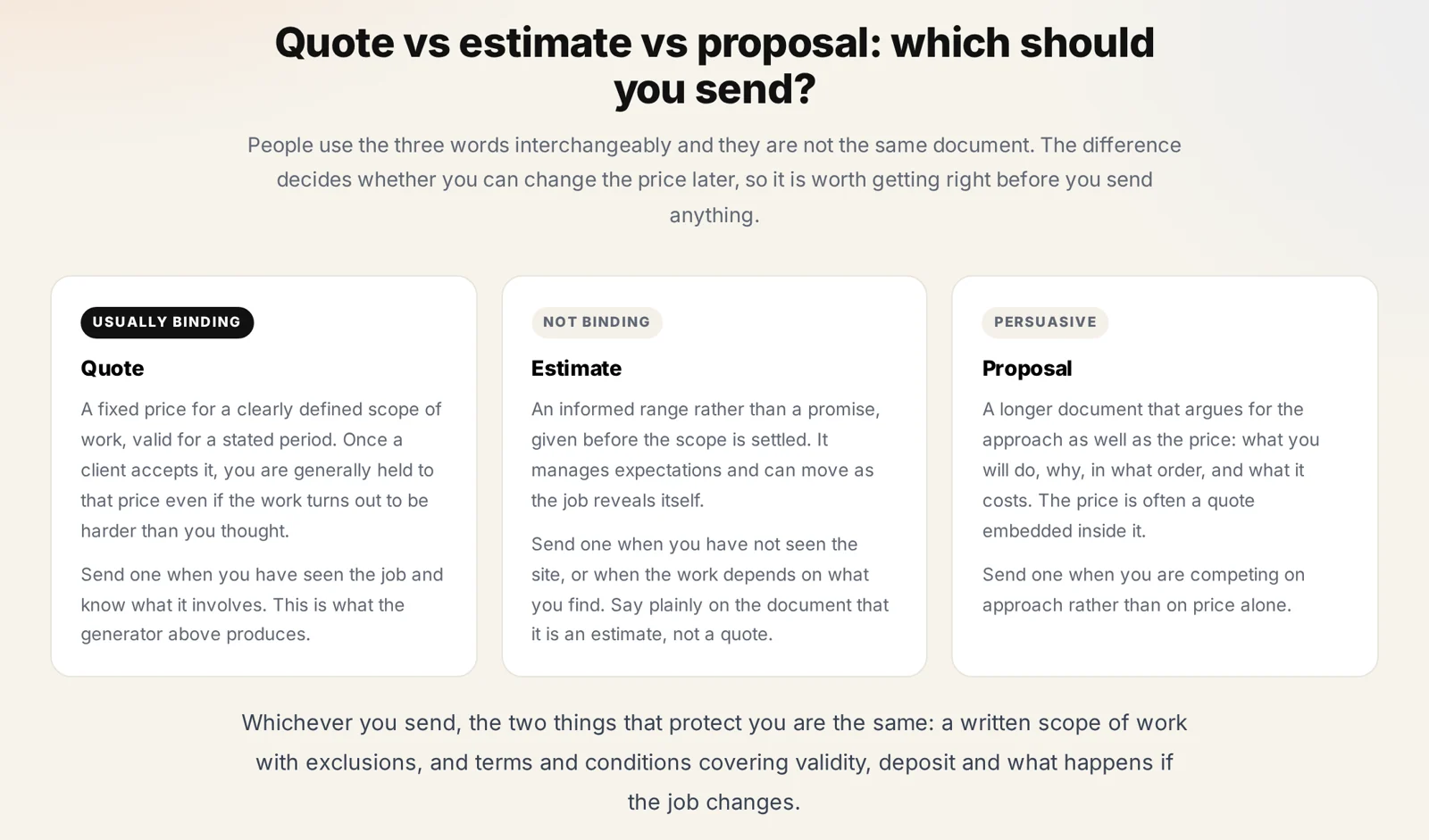
A change order is a short written record of a change to the scope, price or schedule after the quote was accepted, approved by the client before the changed work is done. It carries its own number, refers to the original quote, and its amount is added to or taken off the contract sum. Unwritten extra work is the most common reason a job that was priced right still loses money.
What counts as a change order
Anything that alters the price, the scope or the finish date after the quote was accepted. The usual ones:
- The client asks for extra work that is not on the quote, or for more of something that is.
- Hidden conditions: rot under the tub, an undersized panel, a slab where the drawings showed soil.
- An inspector or a code requirement adds work.
- A material substitution with a price difference, in either direction.
- A delay caused by the client, such as a site that was not ready on the day.
- Work removed from the scope, which is a deductive change order and gets written down for the same reason.
The test is simple. If you would do it differently, charge differently or finish on a different day than the quote says, it is a scope change and it needs a change order.
Write the change order before the work
The moment a change comes up: stop, price it, write it, get approval, then do it. A client who says "just do it" has agreed to a price that exists only in their own head, and it is lower than yours. On a small change, a text message with the amount and a reply that says yes is enough. The signed one-page change order is better, and it is the version that holds up if the job ends in a dispute.
On larger jobs the paperwork has two steps. You send a change order request, sometimes called a COR, that describes the change and proposes the price and the schedule effect. When the client signs it, it becomes the change order. On commercial jobs under AIA contracts the owner can also issue a construction change directive, which orders the change before the price is agreed; the work proceeds and the price is settled after, so track it in your log like an open change order until it is.
The exception is an emergency, such as a leak that has to be stopped now. Do the work that makes the site safe, then write the change order the same day.
What goes on a change order form
A change order template needs seven things, and a plain email with the same seven works as well as a printed form:
- A change order number and the date.
- The job and the original quote number.
- The change in plain words, including anything removed.
- The price, as an addition or a deduction, itemized where it helps the client see it.
- The effect on the schedule, in days.
- The revised contract sum after this change.
- Who approved it, how, and when.
A change order example, written the short way:
Change order 2, job 26-031. Replace the rotten subfloor found under the tub, about 24 square feet, including plywood, fasteners and disposal. Add $640. Adds one working day. Revised contract sum: $19,940. Approved by D. Reyes by email, 4 September.
How to price a change order
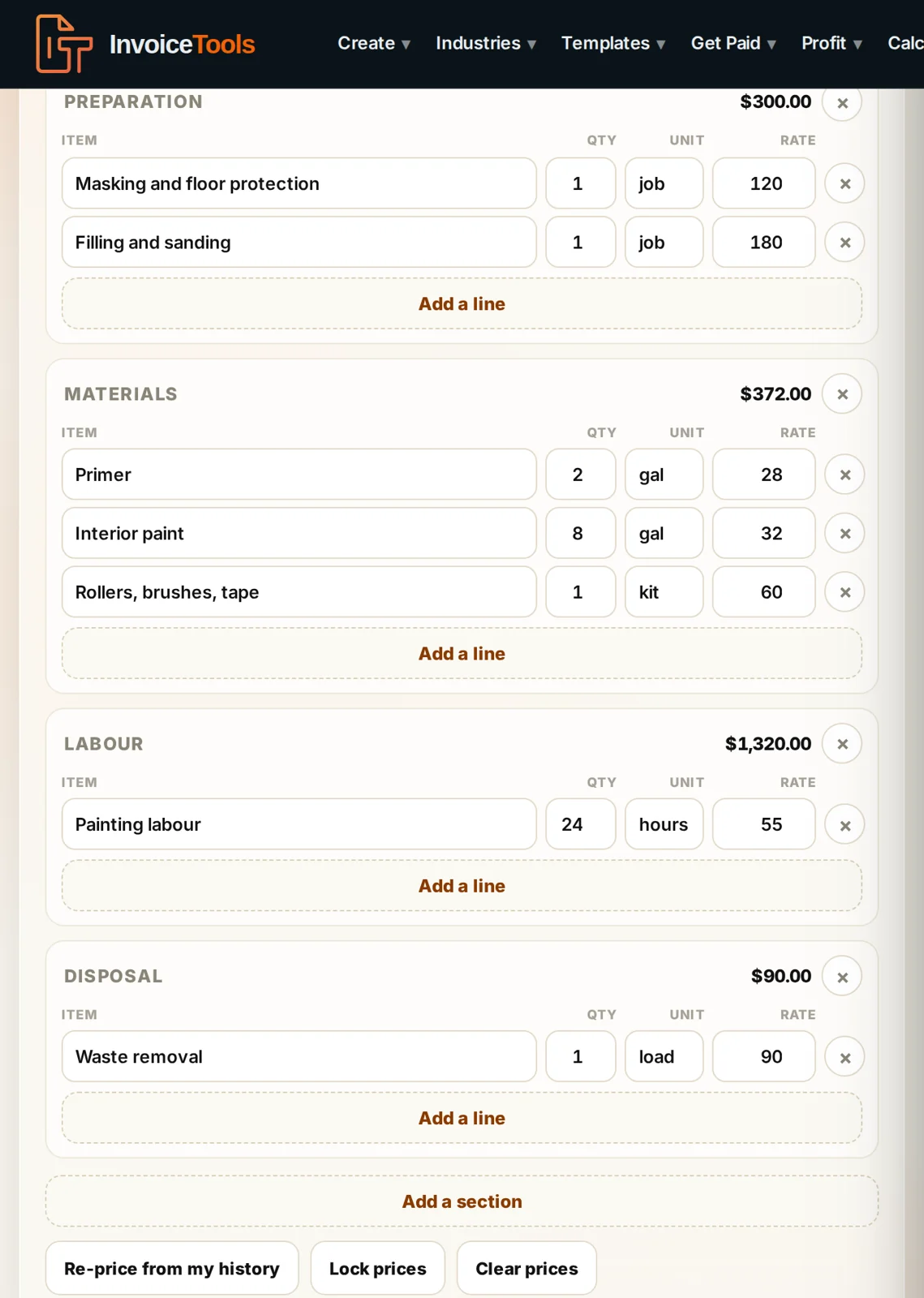
Price the change the way you priced the quote: labor hours at your rate, materials at cost plus the markup on the quote, and the same allowance for overhead. Do not discount extra work to keep the peace. Changed work is more disruptive than planned work, because it was not on the schedule, not less. The markup calculator shows the difference between the markup you add and the margin you keep, which matters when a client asks you to "just cover your costs" on an extra.
When the scope of the change cannot be pinned down before you open the wall, write it as a time and materials change order: your hourly rate, materials at cost plus your markup, and a cap the client approves in advance. Bill it against the hours and receipts, and stop at the cap unless the client approves more.
A deductive change credits the materials you no longer buy and the labor you no longer do. It does not credit the overhead and margin on the whole job, and the terms on your quote should say so.
Keeping a change order log
From the second change order onwards, keep a change order log: one line per change with its number, a few words of description, the amount, the status (requested, approved, rejected), and the running revised contract sum. It fits on one page of the job file. The log is what lets you answer "how did we get from $18,400 to $19,940?" in ten seconds, and it is what the final invoice is built from.
From change order to invoice
On a job with one invoice at the end, the invoice lists the original scope, then each change order as its own line with its number: "Change order 2: subfloor replacement, $640." The client can match every line to a document they approved. On a job billed in stages, each approved change raises the revised contract sum and the next progress invoice shows the new figure; the progress billing guide has the layout.
The quote generator is the quickest way to write one: a short quote for the changed work with the job number in the reference, sent for acceptance, then Convert to Invoice or add the line to the invoice by hand. Where the change is done on site the same day, a signed work order is the record that the client authorized it.
Change order terms for the quote
Two sentences on every quote remove most arguments before they start:
Work not described on this quote is billed as a change order at the rates on this quote, approved in writing before it starts. Conditions that cannot be seen before the work begins, such as concealed damage, are priced when found and treated the same way.
With that on the accepted quote, a change order is not a renegotiation. It is the process the client already agreed to.
The tools for this
More guides
- Progress billing: format and exampleHow to bill a job in stages: the schedule of values, a worked progress invoice with retainage, pay applications and AIA forms, and the quote wording that gets each stage paid.
- How to chase an unpaid invoiceWhat to do when a client is not paying: the day-one reminder email, the day-seven call, the overdue notice with the late fee, the final demand letter, then liens, small claims and collections.
- Deposit invoice: how to bill a depositWhen to ask for a deposit, how much, deposit versus down payment versus retainer, the wording on the quote and the deposit invoice, and how the final invoice shows the balance due.
- How to number invoices: format and examplesAn invoice numbering system that never repeats or skips, format examples with a year or job prefix, separate series for quotes and credit notes, and where the number goes on the invoice.
- How to make an invoiceA walkthrough of the invoice generator with a screenshot of each step: trade, client, lines, terms and the finished PDF.
- How to add a payment link and QR code to an invoiceBuild a payment link for PayPal, Venmo, Cash App, Zelle or ACH, put the QR on the document, and pick the right method for the job.
- Quote to invoiceWhat goes on a quote, quote versus estimate, setting the deposit and validity, and converting the accepted quote into an invoice.
- Invoicing glossaryPlain definitions of the words on an invoice, a quote and a job, each with an example.
Common questions
What is a change order?
A change order is a written record of a change to the scope, price or schedule of a job after the quote was accepted. It carries a number, refers to the original quote, states the price and schedule effect, and is approved by the client before the changed work is done.
What is a change order request?
A change order request, or COR, is the proposal stage: it describes the change and the price and schedule effect you propose. When the client signs it, it becomes the change order. On small jobs the two are the same document.
Do I need a change order for small changes?
Yes, but it can be small too. A text message with the amount and a reply that says yes is enough for a minor extra. Anything that runs to hundreds of dollars or adds days to the schedule deserves a signed one-page change order.
How do I price a change order?
The same way you priced the quote: labor hours at your rate, materials at cost plus your usual markup, and the same allowance for overhead. Changed work is not discounted, because it disrupts a schedule that was already set.
What is a time and materials change order?
A change order priced at your hourly rate plus materials at cost and markup, used when the scope cannot be fixed before the work starts. Set a cap the client approves in advance, bill against hours and receipts, and stop at the cap unless more is approved.
Can a client refuse to pay for a change order?
A client can refuse to pay for work they never approved, which is why the approval comes before the work. A change order approved in writing before it starts is part of the contract, and refusing it is the same as refusing any other invoice.
What is a deductive change order?
A change order that removes work from the scope and reduces the contract sum. It credits the materials and labor no longer needed, and the terms on the quote should say it does not credit the overhead and margin on the whole job.
Should change orders appear on the final invoice?
Yes, each as its own line with its change order number, after the original scope. The client can match every line to a document they approved, which is what stops the final invoice being disputed.
What this is. A guide and template written by Michael Reed. It is not legal advice. Deposit, cancellation and late fee rules differ by state, so have any wording you rely on checked for your state before it goes on a real document.
Last reviewed by InvoiceTools, Houston, Texas, on 28 August 2026.